Leadership Conference Held at UBT with a Focus on Innovation Governance and Artificial Intelligence
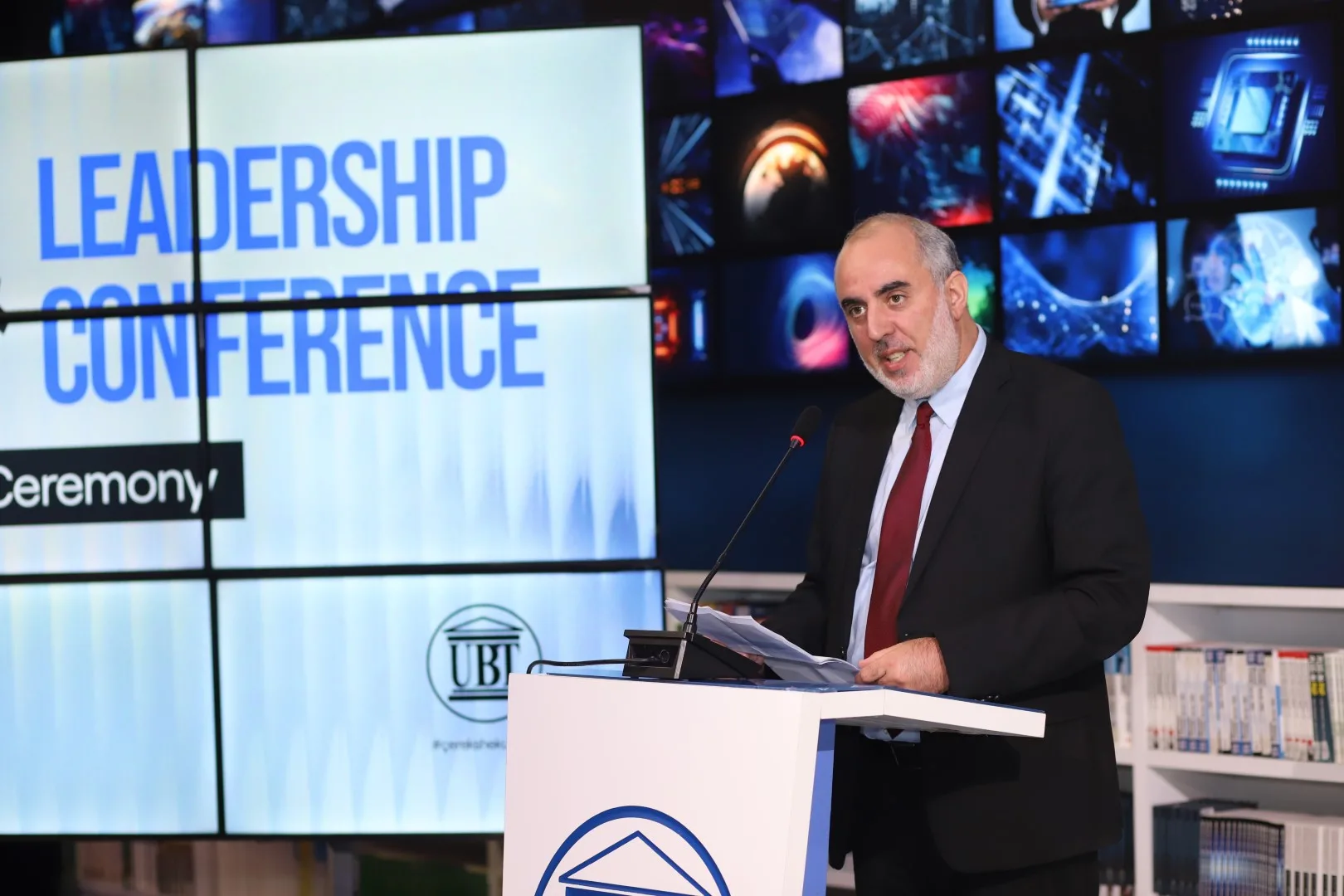
03/07/2026The Leadership Conference, organized around the theme “Innovation Governance: Leadership in the Era of Artificial Intelligence,” was held at the UBT Innovative and Technological Science Park. The conference brought together institutional leaders, industry representatives, researchers, and local and international experts to discuss the impact of Artificial Intelligence (AI) on governance, economy, education, and institutional development.
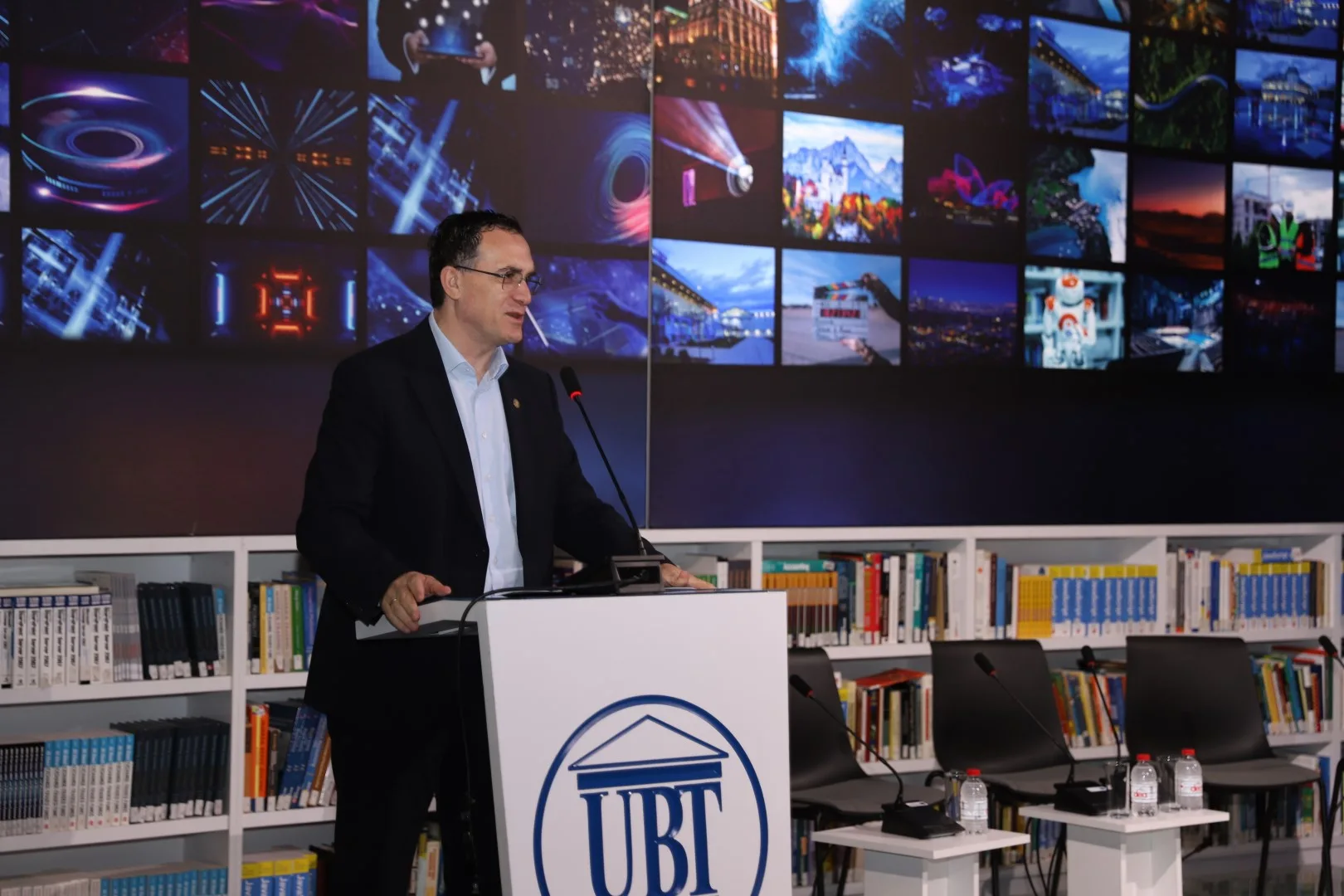
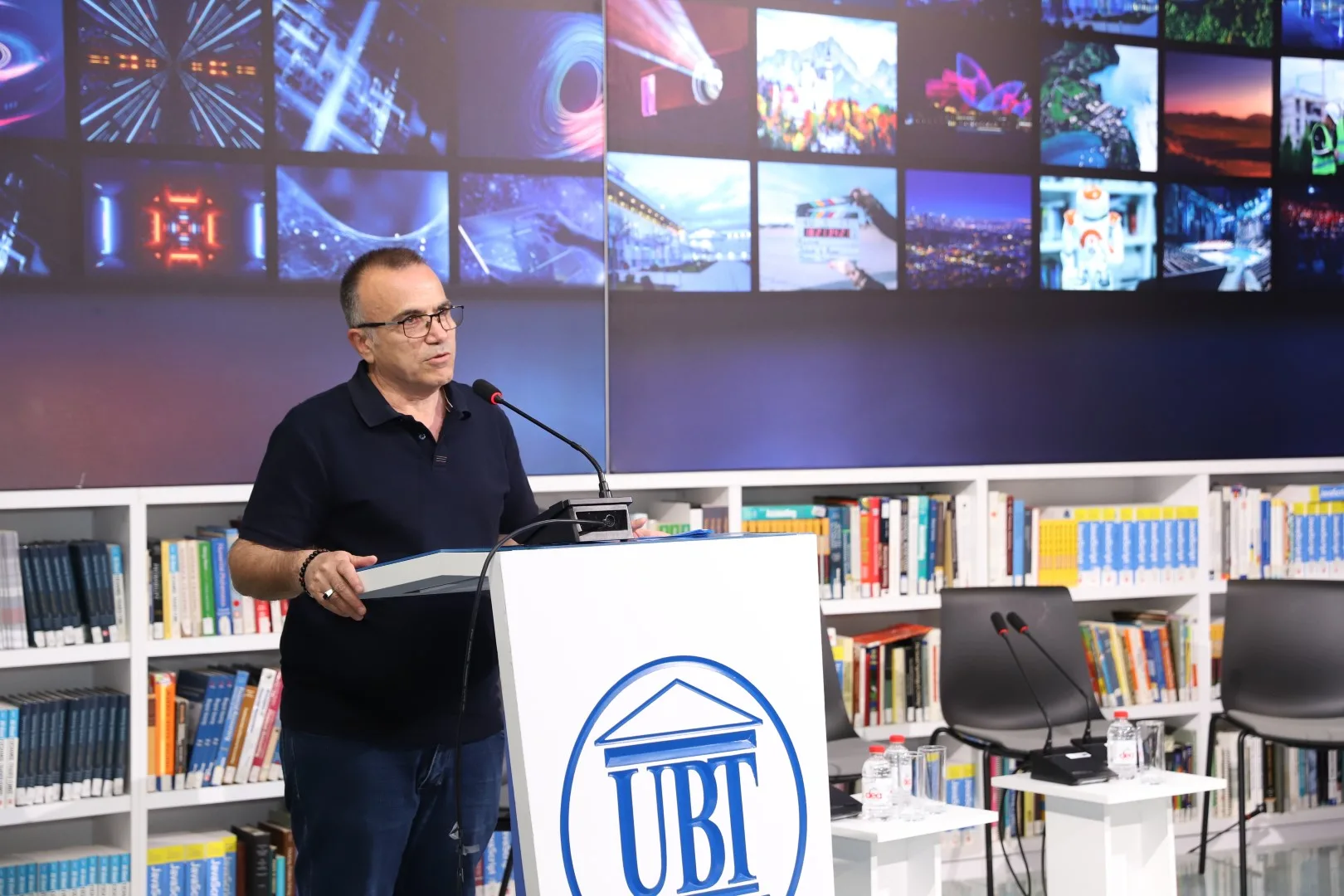
The conference was opened by the Rector of UBT, Prof. Dr. Edmond Hajrizi, who emphasized that technological transformations require new models of leadership backed by innovation, vision, and responsibility. He underlined that modern leadership must evolve alongside technological developments to create more efficient institutions that are better prepared for future challenges.
“Leadership has evolved constantly, and there have always been demands for a different kind of leadership with a different approach during various revolutions—moving from being more productive to other components explained by various experts. I believe we need an empowered leadership that is also supported by the latest technological transformations,” Hajrizi stated.
In this context, Rector Hajrizi explained the importance of adapting leadership to new dynamics. According to him, current demands require a shift toward more productive methods and the integration of advanced components dictated by global developments. He stressed that in the face of these challenges, society and industry need a new model of leadership that must be fully empowered and based on recent technological transformations to guarantee progress and efficiency.
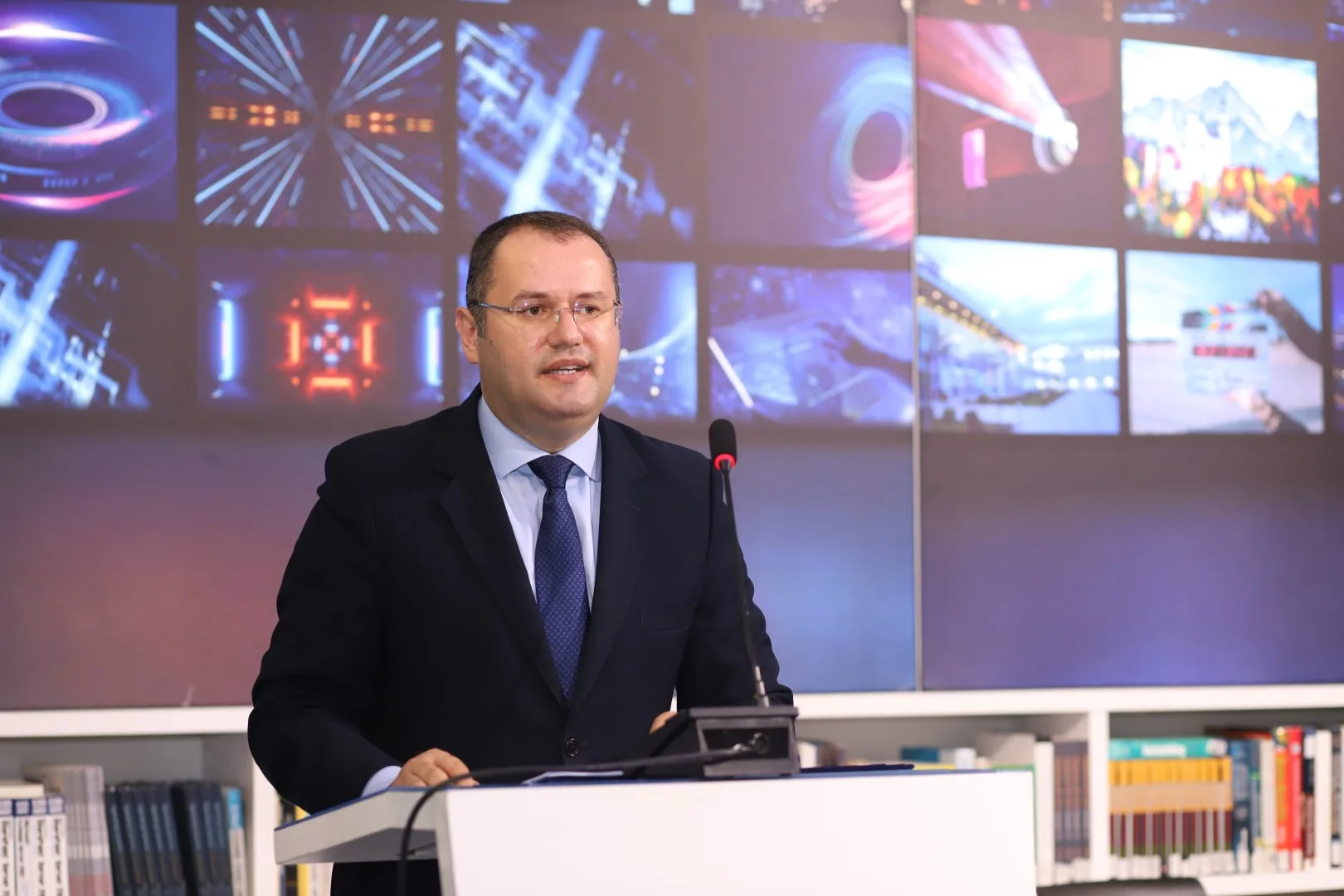
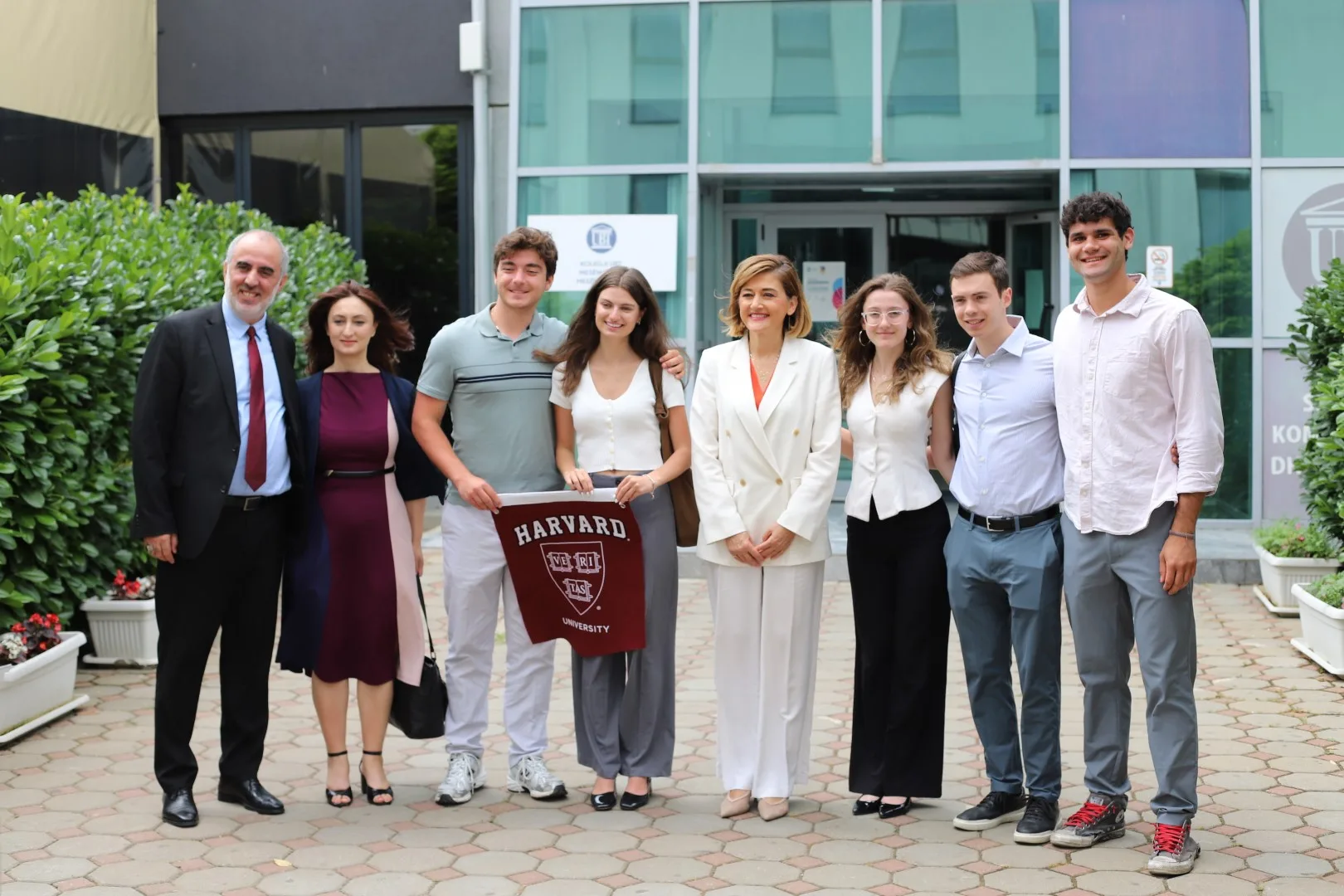
Also participating in the conference was UBT lecturer from Harvard University, Professor Faton Limani, who focused on the historical weight of current innovations.
“Throughout history, societies have been transformed by major discoveries that fundamentally changed the way we live and work. The printing press, electricity, the internet, mobile technology—each of these innovations reshaped economies, institutions, and human interaction. Today, we stand at the beginning of another transformation. Artificial Intelligence is no longer a possibility of the future; it is already making decisions that affect our daily lives. It recommends what we read, influences financial decisions, assists doctors in diagnosing diseases, supports public institutions in resource allocation, and is transforming education, transportation, and manufacturing,” Limani said.
Professor Limani explained that just as the great discoveries of the past changed economic and social structures, humanity today is facing a new era of transformation driven by AI. He drew attention to the fact that this technology has ceased to be a distant future project, as its impact is present in daily life—ranging from simple reading suggestions to decision-making in finance, medicine, education, transportation, and public institution policies.
A significant contribution to the conference was also made by the Governor of the Central Bank of Kosovo, Dr. Ahmet Ismaili, who emphasized the importance of this discussion and the challenges this technology brings to regulatory institutions.
“In this wave of complexity and unknowns, Artificial Intelligence is certainly an important factor. Therefore, the connection between these two topics is fitting and timely. For central banks, Artificial Intelligence is not just a technological development; it is also a challenge of governance, trust, and leadership,” Ismaili said.
Furthermore, focusing on the role and responsibility of leaders in the face of this technological leap, Governor Ismaili added: “In this environment, leadership is measured not only by the ability to represent innovation but also by the ability to govern it responsibly, to manage risks effectively, and to ensure that technological progress benefits society as a whole.”
Through these statements, the head of the CBK explained that merging the topic of leadership with artificial intelligence is highly relevant, citing recent high-level meetings of global central banks as an example.
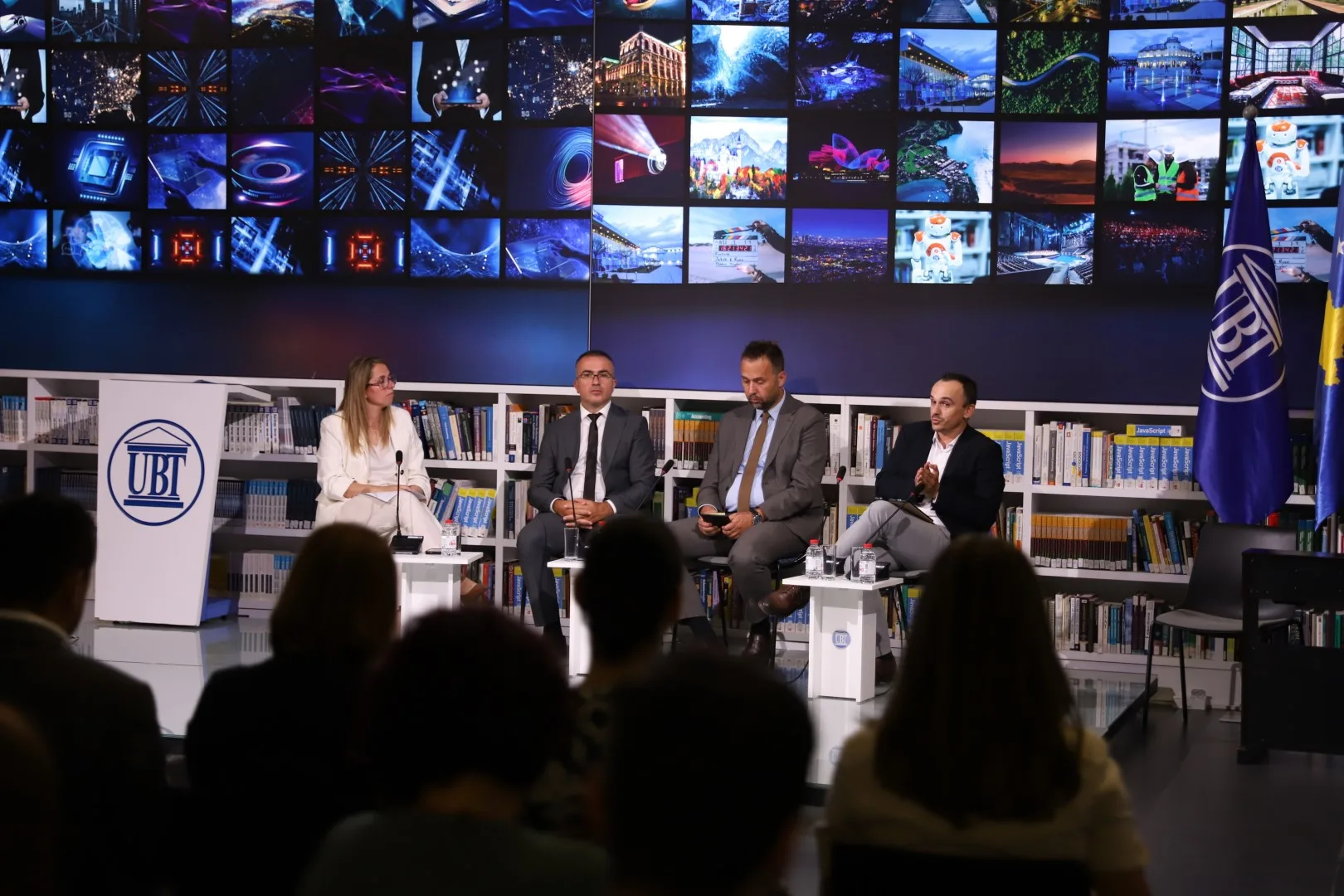
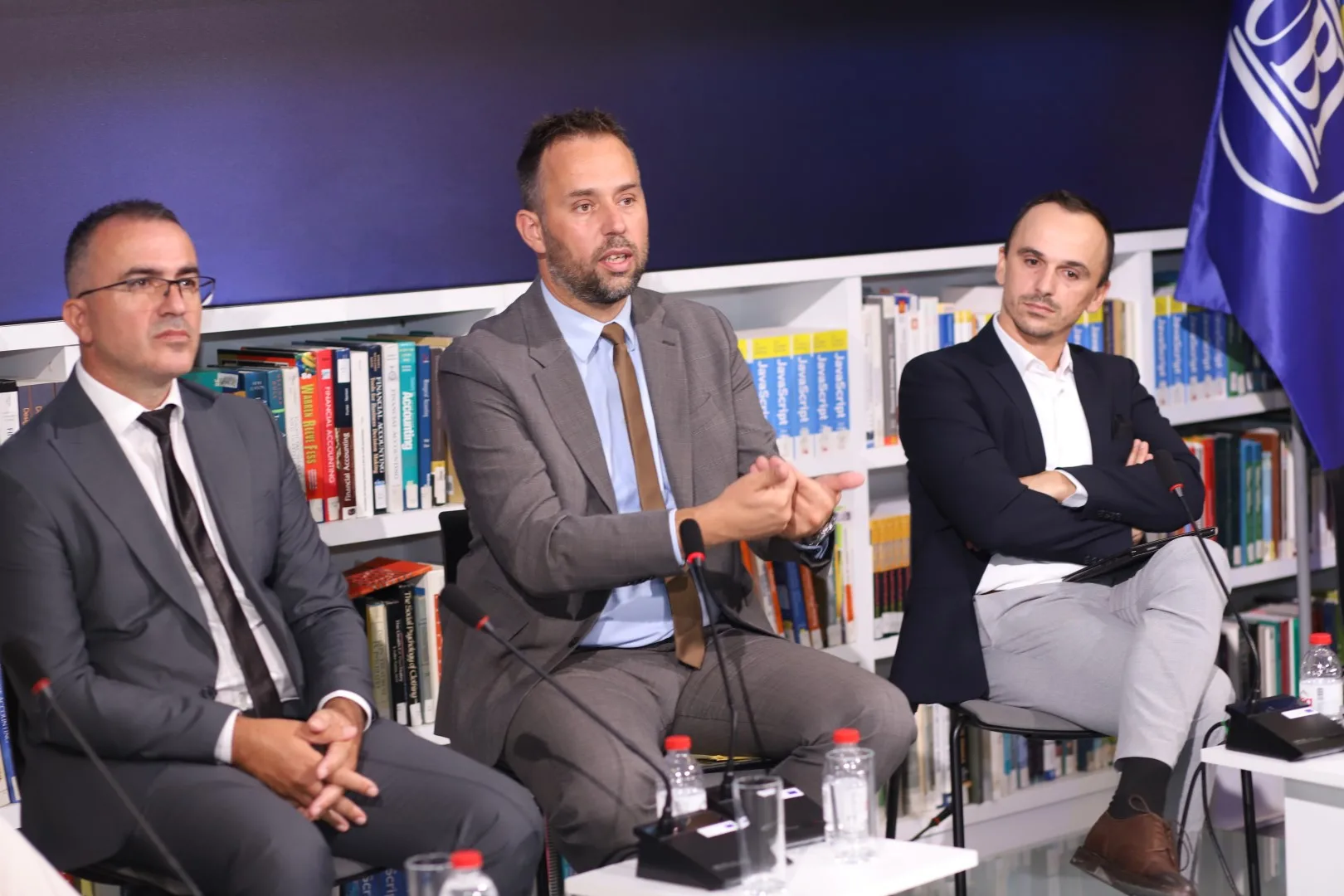
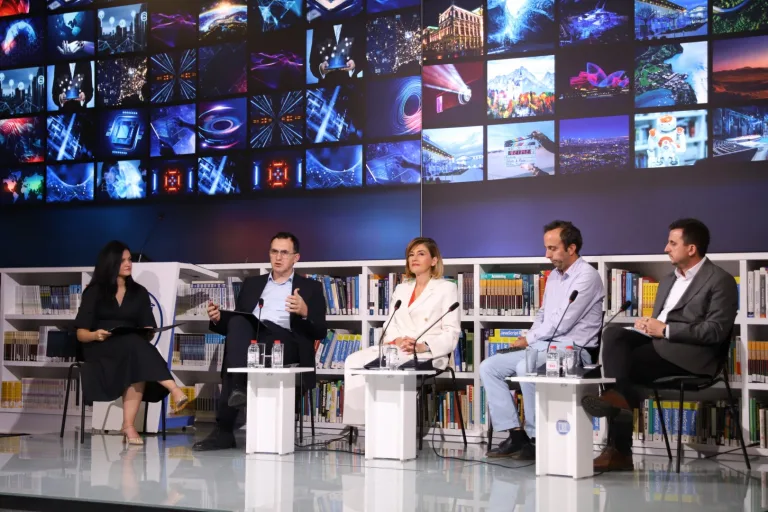
In the first session, “Innovation Governance in Public Institutions,” experts discussed the challenges of digital transformation, cybersecurity, data management, and the role of leadership in implementing new technologies. Prof. Dr. Blerton Abazi, Prof. Florin Aliu, and Prof. Agron Hamiti shared their experiences and recommendations on how institutions should prepare for an era dominated by AI. The panel was moderated by Meli Limani.
Prof. Dr. Blerton Abazi (Dean of the Faculty of Information Systems at UBT) noted that rapid waves of innovation over the past decade have radically changed the operational landscape. He pointed out that older systems were not designed with a cybersecurity defense mindset against these challenges and called for the focus to shift toward leadership.
“Since 2013, we have had several major changes, such as the Internet of Things, Cloud Computing, Data Science, cybersecurity, and recently, artificial intelligence. We usually discuss the technical implementation aspect, and very little about leadership and using these systems as wisely as possible,” Abazi stated.
Prof. Florin Aliu (UBT Professor) stressed that the technological journey has been incredibly fast, culminating today with AI. He called for more prudence, arguing that the future remains unknown because it depends on human decisions, and that data or technology cannot replace proper governance.
“The future is unknown because it depends on the decisions of governments and people. Who could have predicted the 2008-2009 financial crisis in the US, even though the best universities and researchers are there? Artificial intelligence is improving some things, but let’s not rely on it blindly because it also has side effects,” Aliu said.
Prof. Agron Hamiti (Director of the IT Department at the Tax Administration of Kosovo – TAK) underlined from an institutional perspective that the digitalization process leaves no room for hesitation, but rather requires thorough preparation of organizational structure and data management. He revealed that concrete first steps are being taken to create a division specifically dedicated to artificial intelligence.
“Digitalization leaves no room for hesitation. We have drafted documents generated from the general strategy, one of which is for data management. We have also updated the organizational structure and foresee the creation of a division that will specifically deal with artificial intelligence (AI),” Hamiti noted.
Following a networking session, the conference continued with the panel “Governance of Artificial Intelligence in Business and Innovation Ecosystems,” which discussed the impact of AI on transforming industry, entrepreneurship, healthcare, and economic development. Contributions to this panel were made by Mimoza Kusari-Lila, Prof. Dr. Edmond Hajrizi, Prof. Dr. Muhamet Gërvalla, and Assoc. Prof. Dr. Besnik Qehaja, while the discussion was moderated by Elinda Krasniqi.
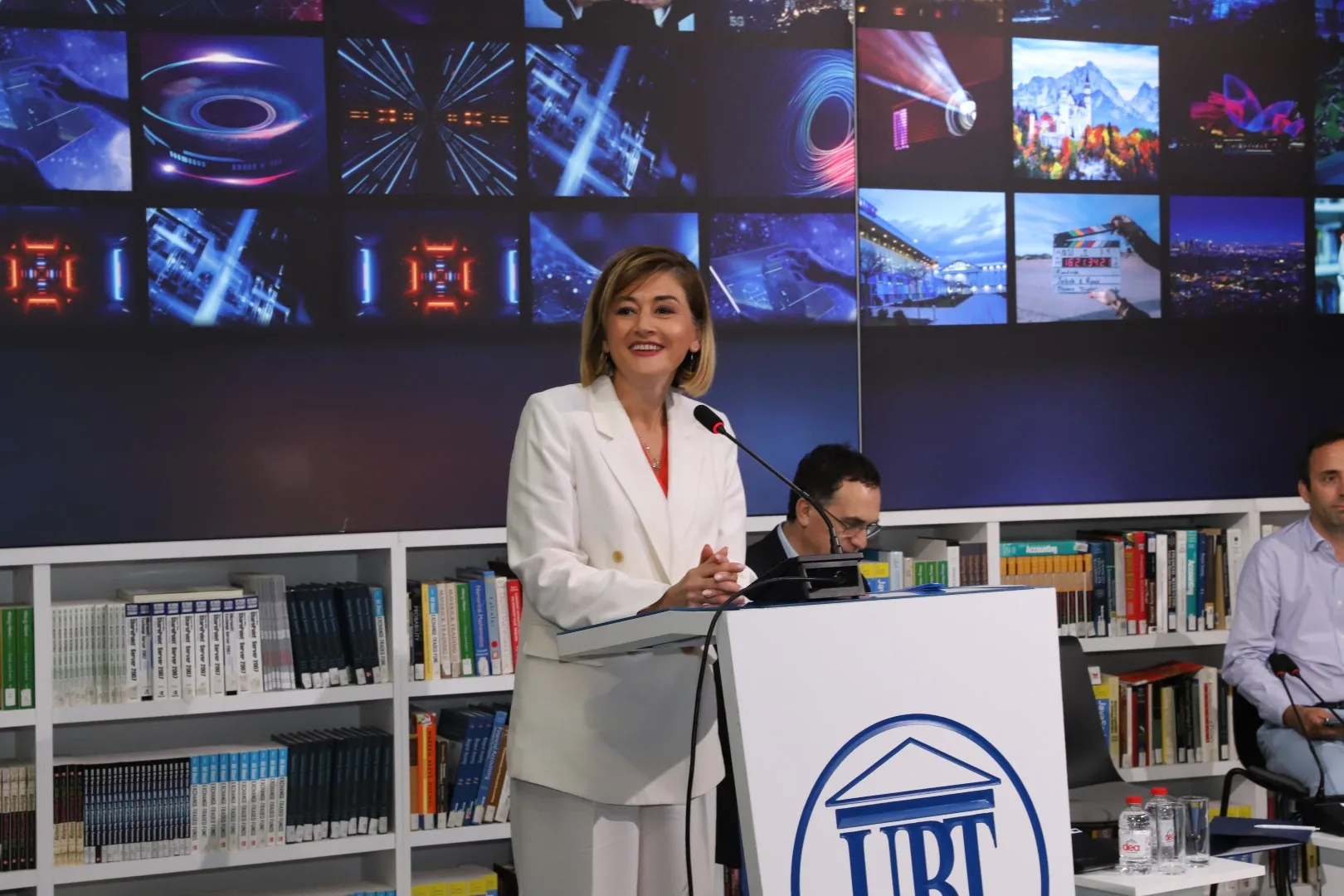
Mimoza Kusari-Lila (Minister of Industry, Entrepreneurship, Trade, and Innovation) pointed out that innovation and technology have moved much faster than legal regulations, creating a large gap that needs immediate addressing through public policy. She emphasized that for the first time, her ministry has taken on the innovation portfolio, aiming to better connect institutions with the private sector.
“We are in the midst of conceptualizing and interconnecting the functioning of artificial intelligence, innovation, public policies, and encouraging the private sector to use them. I felt that for the first time we have a sector where the gap between public policies and the private sector is the largest ever, because innovation, information technology, and everything related to the concept of discovery and creativity has moved much faster, without necessarily being regulated,” Kusari-Lila expressed.
Prof. Dr. Edmond Hajrizi (Rector of UBT) focused on the impact that the rapid spread of global cognitive knowledge has on universities. According to him, this period of transformation does not threaten the existence of educational institutions but serves as momentum to reflect on their new role, which should be that of a primary driver and coordinator in the innovative ecosystem.
“The impact of artificial intelligence or a general global cognitive knowledge, which is already accessible, calls into question the previous classical and traditional processes of how institutions have existed. The position of universities is being questioned—not in a negative sense, but as momentum to reflect and transform in the future. It is not a question of the university’s existence, but its role and format to achieve the highest possible impact,” Hajrizi emphasized.
Prof. Dr. Muhamet Gërvalla (Dean of the Faculty of Management, Business, and Economics) explained how globalization and AI are breaking geographical barriers from a business development perspective. He stressed that the new era requires companies to change their mindset, moving from a simple focus on their internal resources toward creating personalized services and understanding the customer digitally.
“Artificial intelligence is one of the golden opportunities that businesses must exploit so that they are initially guided in terms of mindset, starting from defining their business strategy and then operationally. Today the approach has changed; the old form of operation is not enough. Businesses must transform in a way that recognizes customer interests and creates a virtual personalization of the individual,” Gërvalla stated.
Assoc. Prof. Dr. Besnik Qehaja (Dean of Computer Science and Engineering at UBT) addressed the practical challenges of lacking integrated data in Kosovo. Using the healthcare system as an example, he pointed out that without platforms that collect and generate complete information, it is quite difficult to create models for AI-based decision-making, which also impacts ethical security aspects.
“The lack of information due to non-integrated systems puts us at a slight disadvantage in all aspects, including ethics and decision-making. At the moment, without generated data, we cannot design or create decision-making models relying on artificial intelligence. However, systems are being implemented, and thanks to artificial intelligence, they will be implemented faster,” Qehaja said.
The conference was also attended by Prof. Dr. Lorenc Ekonomi, Rector of “Fan S. Noli” University in Korçë.
The event concluded with an interactive leadership session led by Gerta Uruçi-Limani, who addressed contemporary dimensions of leadership in the age of Artificial Intelligence. Following this, Prof. Faton Limani led an open discussion with the participants, where ideas and recommendations were exchanged regarding the development of new leadership models and innovation governance.