Urban Planning and Architecture in Focus at UBT’s International Conference
26/10/2026Spatial planning, urban development, territorial governance, and the role of technology in shaping the cities of the future were at the centre of an academic session held as part of UBT’s international conference programme.
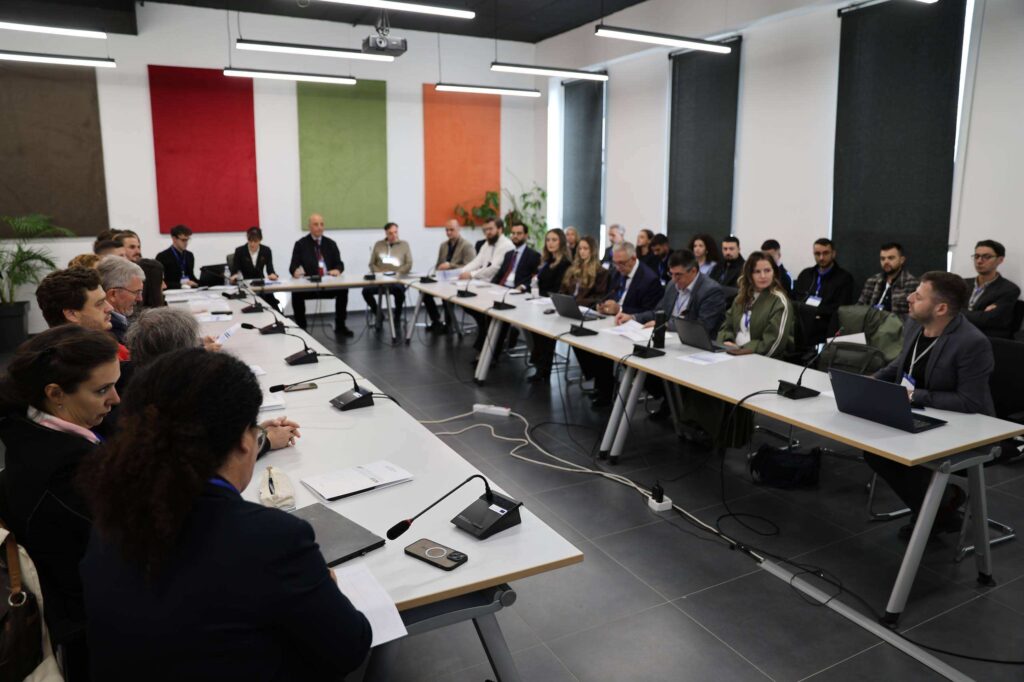
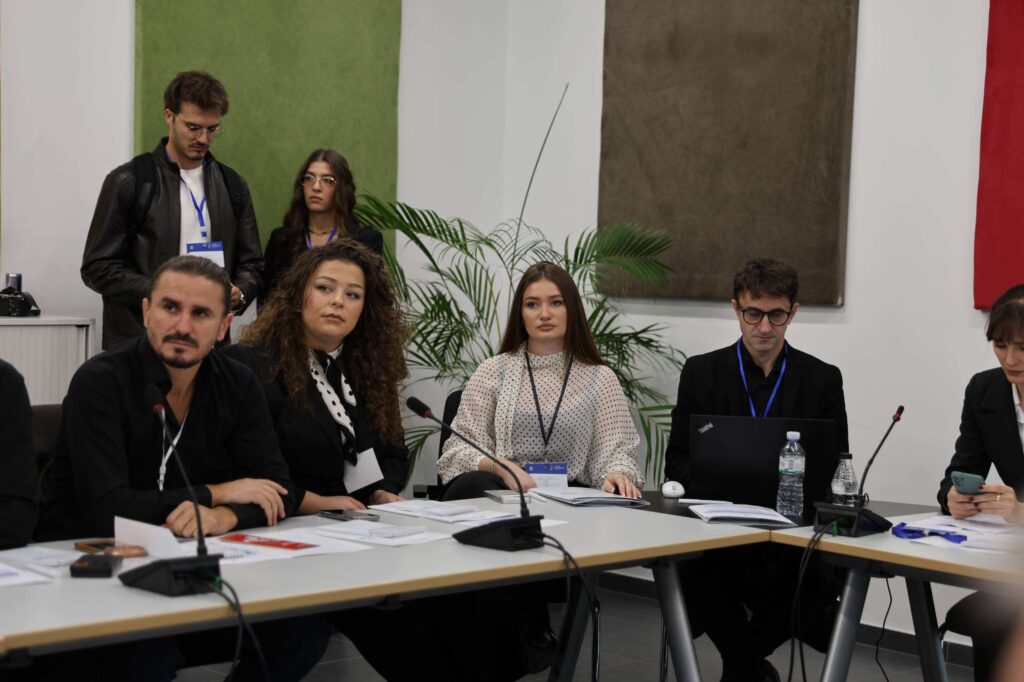
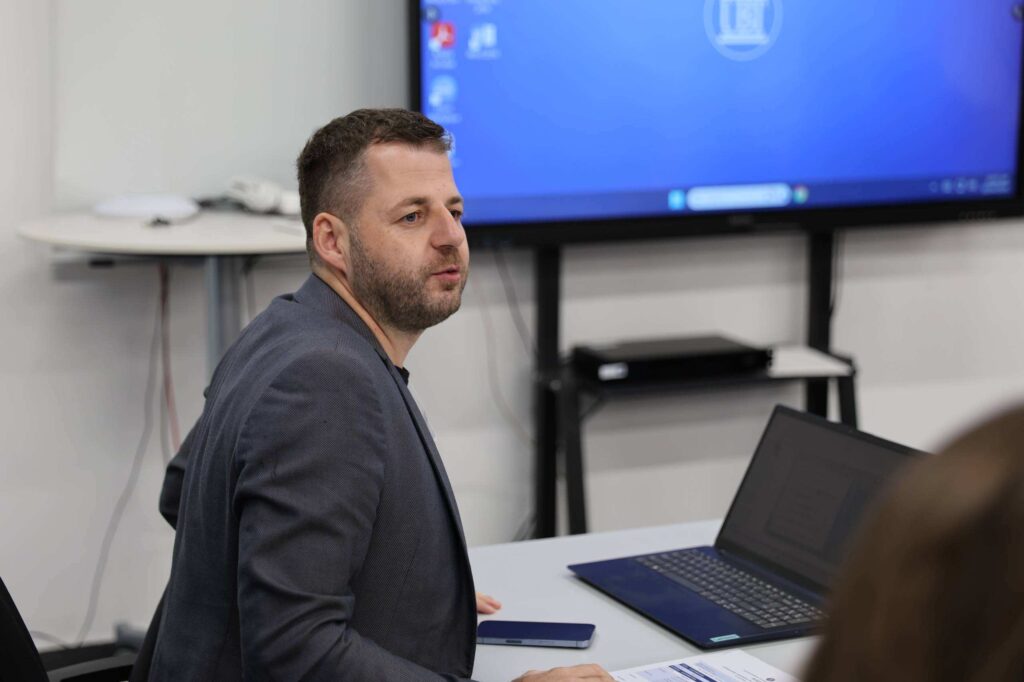
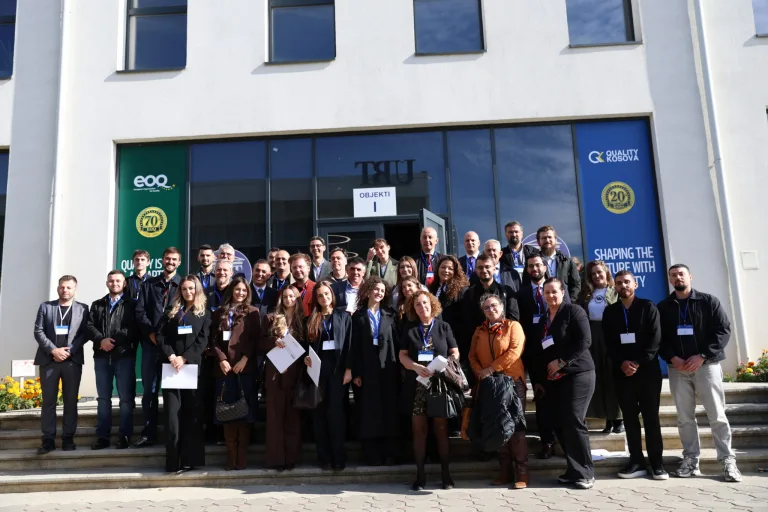
Experts, professors, professionals, and researchers in architecture and spatial planning gathered at UBT to discuss the challenges and opportunities of urban development, sustainable planning, and the transformation of cities through contemporary approaches and innovative technologies.
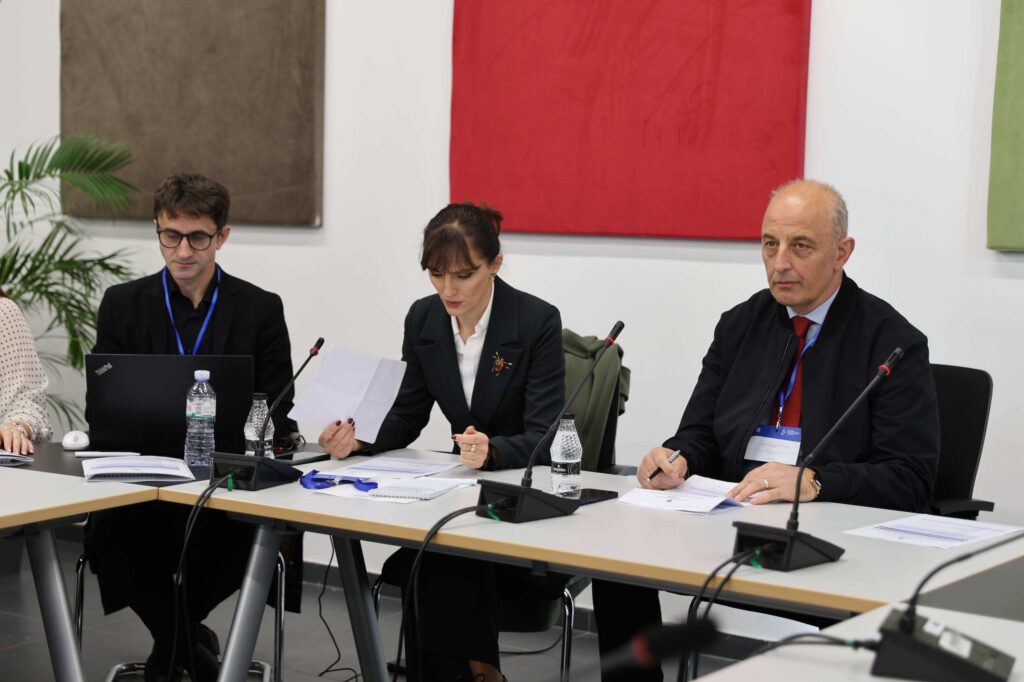
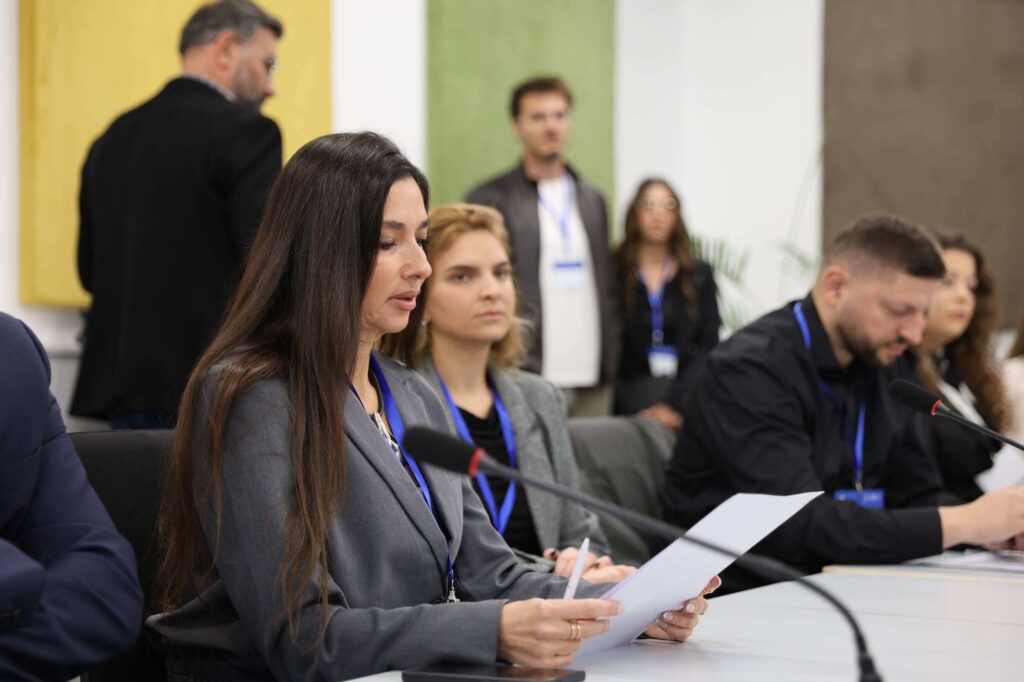
The session was led by Prof. Dr. Binak Beqaj and also featured Mimoza Haxhija Jedrashi, President of the Chamber of Architects of the Republic of Kosovo. Through a series of research presentations, participants explored regional planning, institutional performance, climate change, green spaces, and the application of geospatial technologies in urban development.
Keynote speaker Frank D’Hondt, who joined the session online, presented “Sharing Futures: A Generation-Fair Agenda for Regenerative Planning,” highlighting the importance of regenerative planning and an intergenerationally equitable agenda for the future of urban spaces.
One of the topics addressed was Kosovo’s proposed regional division according to European NUTS principles. Elvida Pallaska and Binak Beqaj presented the paper “Proposed Regional Division of Kosovo According to EU NUTS Principles.”
Meanwhile, Shqiprim Ahmeti, Rineta Jashari, and Servet Spahiu presented “The State of Municipal Spatial Planning in Kosovo: Document Completion, Institutional Performance and Implementation Gaps,” examining the status of municipal spatial planning, planning documentation, and implementation challenges.
Venera Goxha presented “From Spatial Data to Ethical Decisions: An Ethical Governance Framework for GIS and AI-Assisted Municipal Planning in Kosovo,” focusing on the ethical governance of geospatial data and the use of artificial intelligence in municipal planning. Skender Kosumi presented “Seestadt – A New Dimension of Living,” offering perspectives on emerging approaches to urban living.
The impact of climate change on urban planning was explored by Fjollë Caka in her presentation “Urban Planning and Climate Change Management: Where Does Kosovo Stand?” Meanwhile, Nexhat Balaj presented “The Impact of Green Spaces on the Quality of Life in Urban Environments,” highlighting the importance of green spaces for quality of life in urban settings.
The use of geospatial technologies to support sustainable development was the focus of “Integrating the 3-30-300 Rule Into Urban Planning: Green Space Access and Sustainable Development Using Geospatial Technologies (GIS, GPS, RS),” presented by Eli Binxhija and Edon Maliqi.
Eli Binxhija, Era Desku, Erdonis Duraku, Lendiana Fetaj, Gramoz Gashi, Poema Doli, and Milot Qerimi also presented “Negotiating Urban Futures: The Great Game as a Method for Strategic Urban Transformation in Kartal, Istanbul,” exploring strategic approaches to urban transformation through planning methods and the negotiation of cities’ future development.
Prishtina’s urban heritage and development were examined by Shqiprim Ahmeti, Binak Beqaj, and Anita Ymeri through their paper “Classifying the Unwritten City: Towards a Structured Historiography of Prishtina’s Urban Development – Part II,” which focused on documenting and structuring the history of the capital’s urban development.
The international conference organised by UBT’s Faculty of Architecture and Spatial Planning continued with an afternoon session featuring further research presentations by experts in the field.
Particular attention was given to the integration of artificial intelligence into architectural design, biomimetic and biophilic approaches, the relationship between architecture and engineering, and the preservation and reassessment of architectural heritage. Discussions also addressed social housing, urban renewal, architectural research, and improvements in the quality of residential spaces.
The programme featured Prof. Dr. Binak Beqaj and Mimoza Haxhija Jedrashi, President of the Chamber of Architects of the Republic of Kosovo, highlighting the importance of professional and academic collaboration in advancing architecture in Kosovo.
One of the key presentations was delivered by Martijn Schildkamp, titled “(Re-)Introducing Vernacular Building Techniques into Contemporary Architecture and Engineering Practice,” which examined the integration of traditional construction techniques into contemporary architectural and engineering practices.
The technological dimension of architecture and the transformation of professional practice were explored through several contributions. Alp Arda, who participated online, presented “Power-scapes: Decision Infrastructure as a Design Methodology for Architectural Practice in Transition.”
Gazmend Uka examined the influence of generative artificial intelligence on architectural education in his paper “Prompting Before Thinking? How Generative AI May Bypass Creative Stages in Architectural Design Education.” Faik Beqiri presented “From Data to Form: Rethinking the Representation of the Unseen,” exploring the relationship between data and architectural representation.
The role of nature and biological processes in design was another key theme. Dea Luma presented “From Biophilic Design to Neurophysiological Evidence: Understanding Human Brain Responses to Indoor Greenery,” while Arton Qorri explored “Biomimetic Design in Architecture: Development of a Biomimetic Methodology Based on the Structure and Biomechanics of the Femur.” These presentations highlighted the connections between architecture, natural sciences, and research into the effects of the built environment on people.
The integration of architecture and engineering, alongside the development of multifunctional spaces, was addressed by Bard Bajcinovci in “Integrating Architecture and Engineering for Kosovo’s Urban Renewal.” Lisa Shaqiri and Luzim Begiri presented “The Multifunctional Building as a Platform for Social and Urban Hybridization.”
Special attention was also given to social housing and the development of research capacity in architecture.
Ramë Hamzaj and Atdhe Arifi presented “Management of the Construction of Affordable and Social Housing Buildings in Kosovo.” Andi Latifaj and Besa Jaghiu explored “National Institute of Architecture in Kosovo: A Research-Based Architectural Design Proposal,” while Ilhan Cucović presented “An Institute for Architectural Research in Peja, Kosovo: Rationale, Comparative Models and Strategic Framework.”
These contributions examined opportunities to expand affordable housing provision and strengthen research infrastructure in Kosovo’s architectural sector.
Architectural heritage and the history of traditional spaces were represented through several scientific papers.
Nexhat Çoqaj presented “The Hearth in Traditional Albanian Architecture: Historical Evolution, Architectural Typology and Socio-Cultural Functions,” while Pajazit Hajzeri explored “Public Baths — Hammams: History and Development in Kosovo.”
Bekim Çeko and Marash Demiri presented “An Analysis of Center-Periphery Interaction in Ottoman Bath Architecture: Structural and Spatial Configuration,” examining the spatial organisation and structural configuration of Ottoman hammam architecture.
Concluding the session, Elira Bushati presented “Post-Occupancy Evaluation of Student Dormitories Built Before and After 1999 in Prishtina: Assessment and Recommendations for Future Projects,” focusing on the assessment of student dormitories in the capital and recommendations for future projects.
The event concluded with a closing ceremony and the distribution of certificates to participants, marking the end of a programme that highlighted the importance of scientific research, professional knowledge exchange, and innovative approaches to spatial planning and the future of cities.
Through this conference, UBT continued to provide a platform for academic and professional dialogue on sustainable urban development, architectural innovation, and the challenges shaping the built environment in Kosovo and beyond.