Political Science and Security Studies Researchers Address Contemporary National and International Security Challenges at UBT
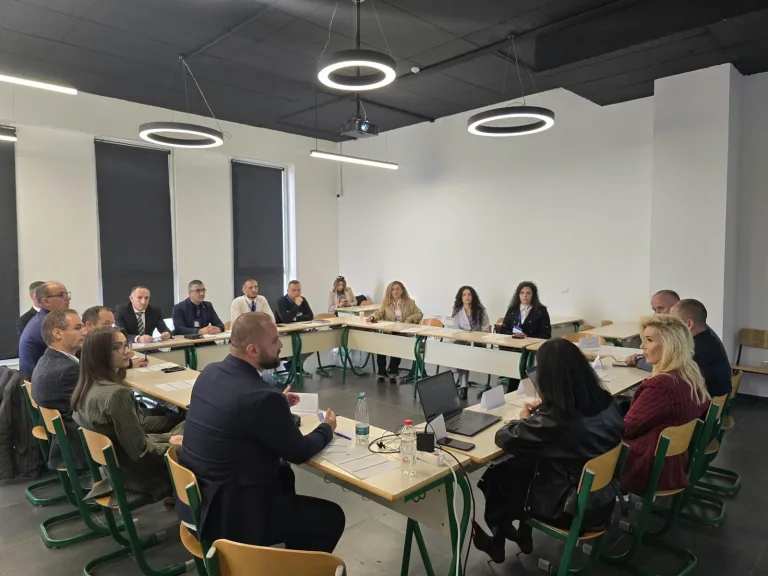
26/10/2026As part of the UBT International Scientific Conference, a dedicated session on Political Science, International Relations, and Security Studies brought together researchers and experts to present their scientific work on current geopolitical developments, regional and global security challenges, and the impact of technology on the transformation of security policies.
The session addressed a range of topics related to migration and European policies, the perception of Russia as a threat and the implementation of restrictive measures, human–AI interaction in criminal intelligence, and the political and security dynamics of the Russia–Ukraine conflict.
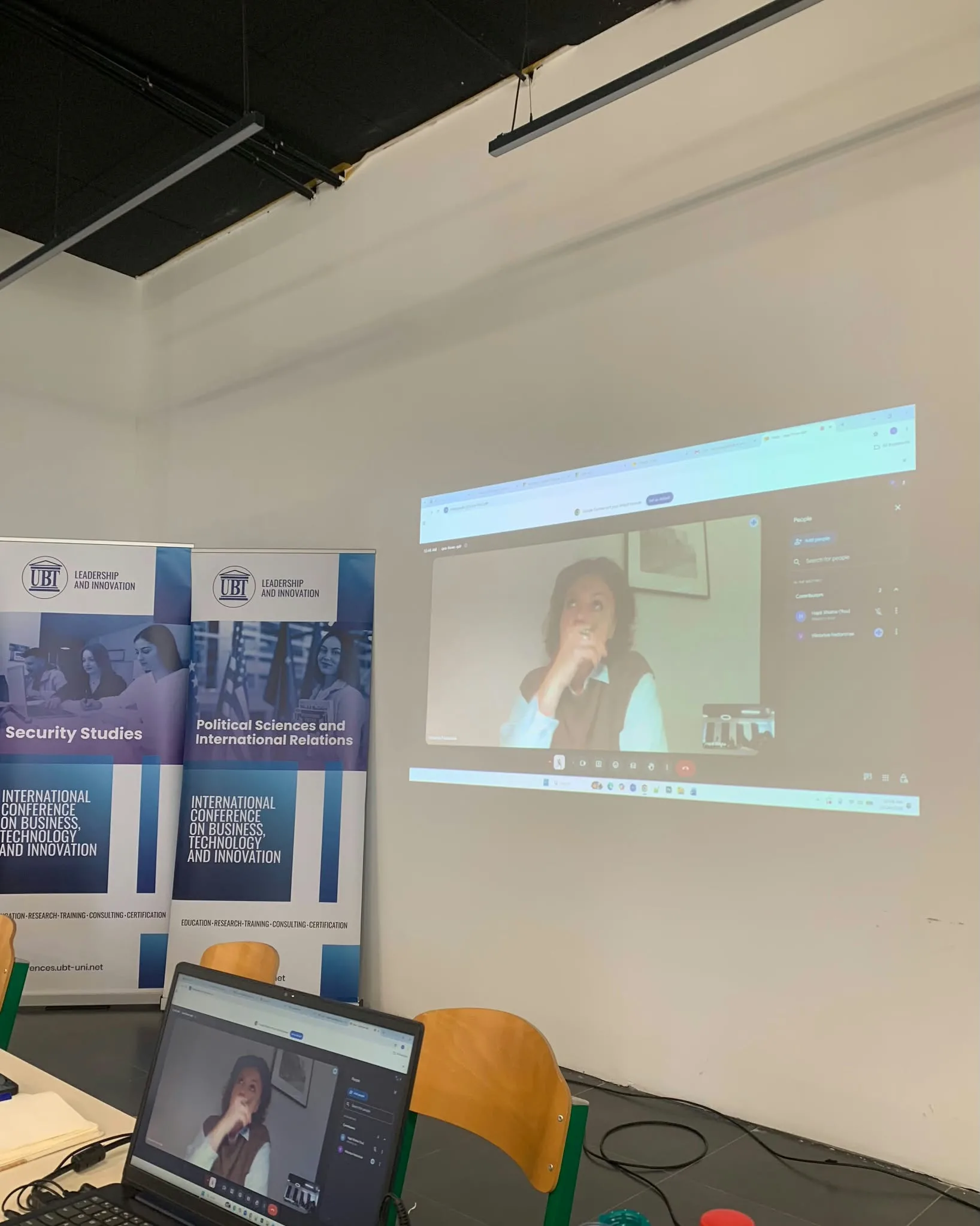
Particular attention was also given to security interdependence in the Western Balkans and the challenges posed by hybrid warfare to Kosovo’s national security. During the online session, Prof. Ferdochak presented the paper “Sweden’s Refocusing on the High North,” examining Sweden’s strategic reorientation towards the High North and its significance in the context of contemporary geopolitical developments and international security.
The session featured the following scientific presentations:
- “Migration Waves and Policy Responses in Europe: The Case of Albanian Migrants” – Prof. Ass. Dr. Llokman Mirtezani and Prof. Ass. Dr. Muazam Halili.
- “Framing Russia as a Threat and Implementing Restrictive Measures” – Prof. Ass. Dr. Bashkim Smakaj and Prof. Assoc. Dr. Dritero Arifi.
- “Beyond Cybercrime: Human-AI Criminal Intelligence and Transformation of Policing in the Western Balkans” – Dr. Kenan Idrizaj.
- “The Political and Security Dynamics of an Unresolved War: Bargaining Failure, Power and Distribution of Costs in the Russia-Ukraine Conflict” – Prof. Assoc. Dr. Ngadhnjim Brovina, Prof. Ass. Dr. Bahri Gashi, Prof. Ass. Dr. Hajdi Xhixha, Prof. Ass. Dr. Arian Kadriu, and Taulant Morina.
- “Security Interdependence and Strategic Divergence: Mapping the Western Balkans as a Regional Security Complex” – Prof. Dr. Alfred Marleku.
- “Hybrid Warfare and the Challenges to Kosovo’s National Security: Threats, Actors, and Mechanisms of Institutional Resilience” – Prof. Ass. Dr. Veton Zejnullahu and Erion Zejnullahu.
- “The Intelligence Community in the Republic of Kosovo and Its Role in National Security” – Prof. Ass. Dr. Bashkim Smakaj and Vesa Shatri.
Through these presentations, participants contributed to academic discussions on contemporary challenges in international relations, highlighting the importance of scientific analysis, regional cooperation, and stronger institutional mechanisms to address both traditional and emerging threats.
The session reaffirmed the importance of interdisciplinary research and academic dialogue in understanding evolving security dynamics and developing effective responses to complex challenges at the national, regional, and international levels.