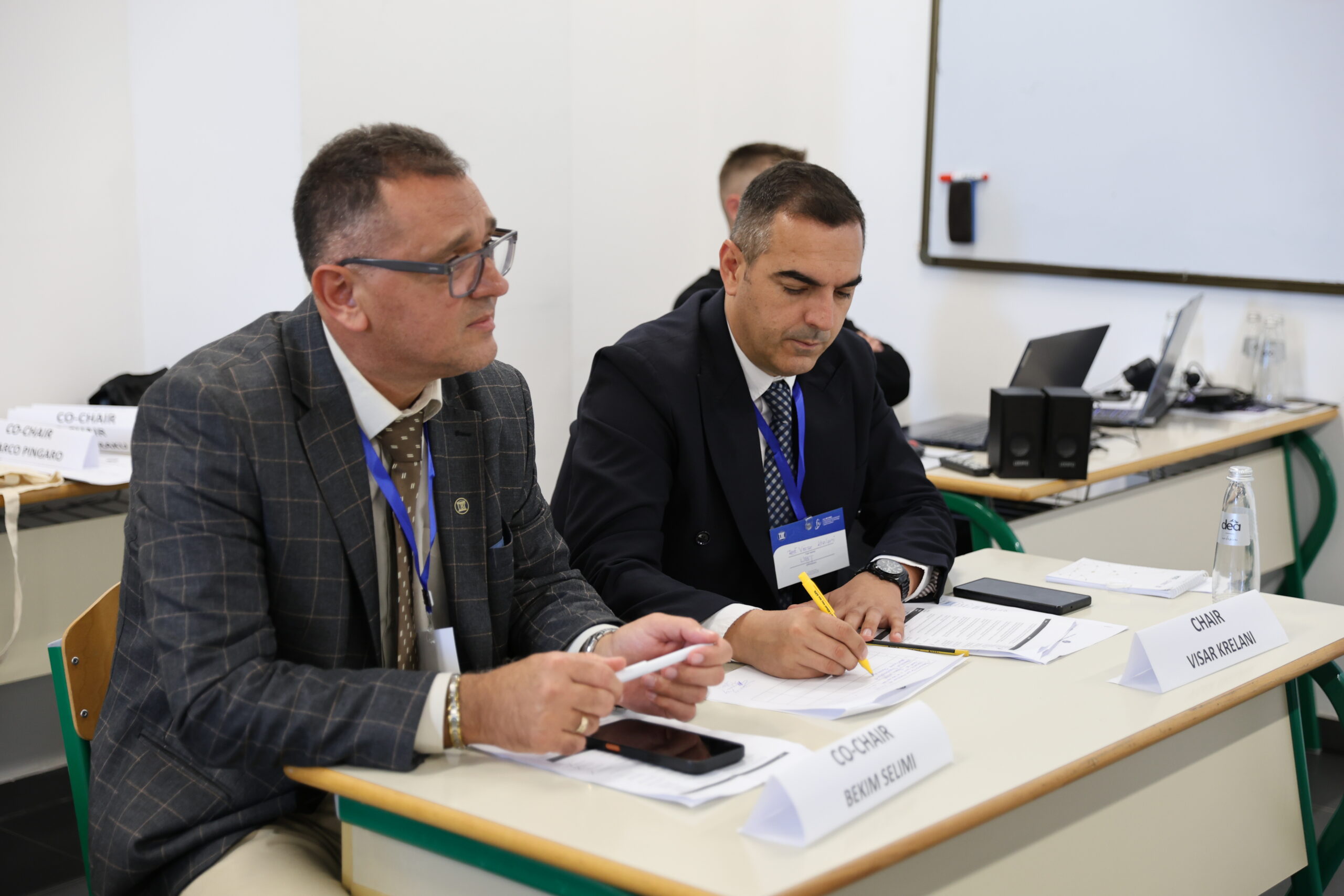
UBT’s Civil Engineering Conference Explores Structural Safety, Project Management, Infrastructure, and Sustainable Development
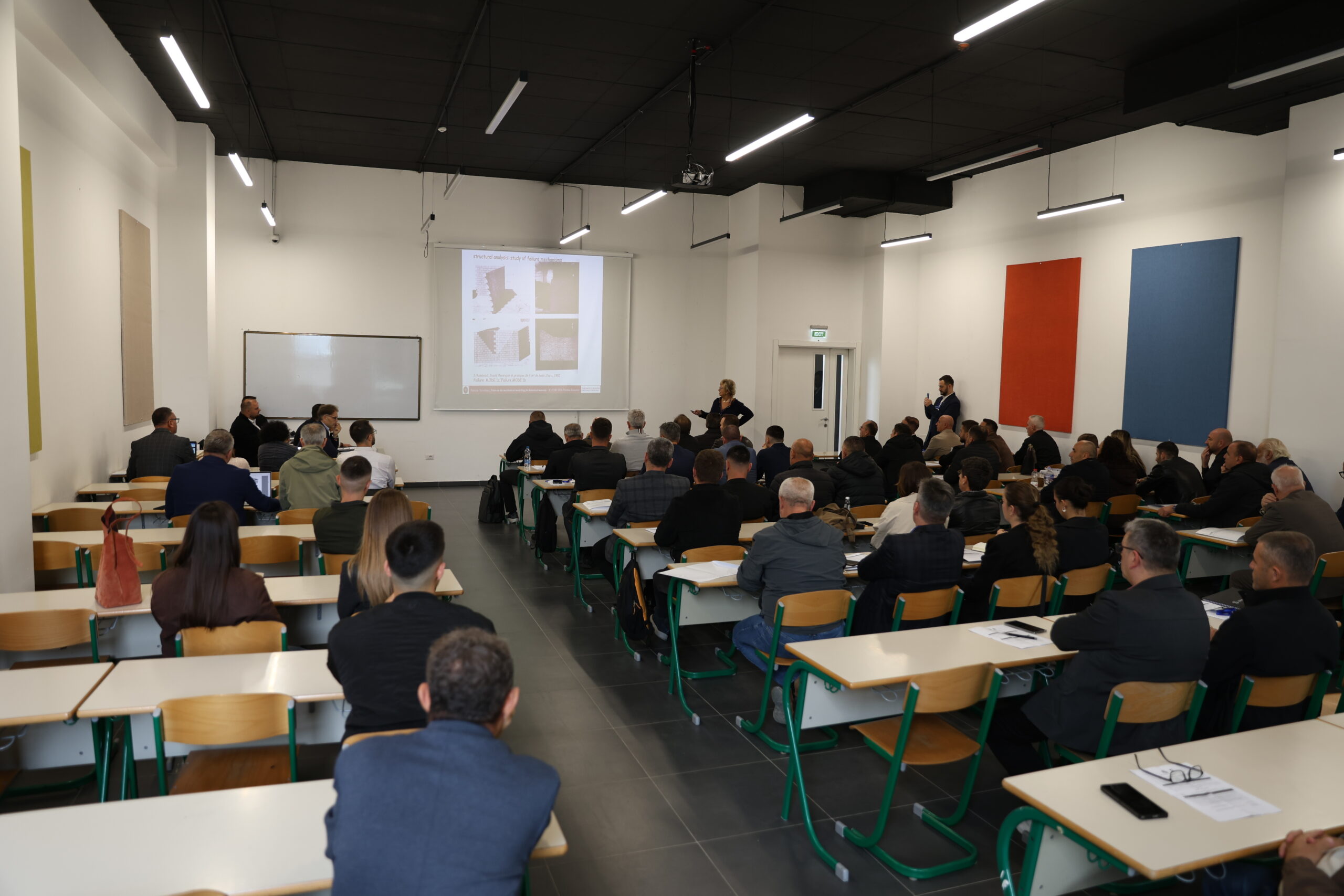
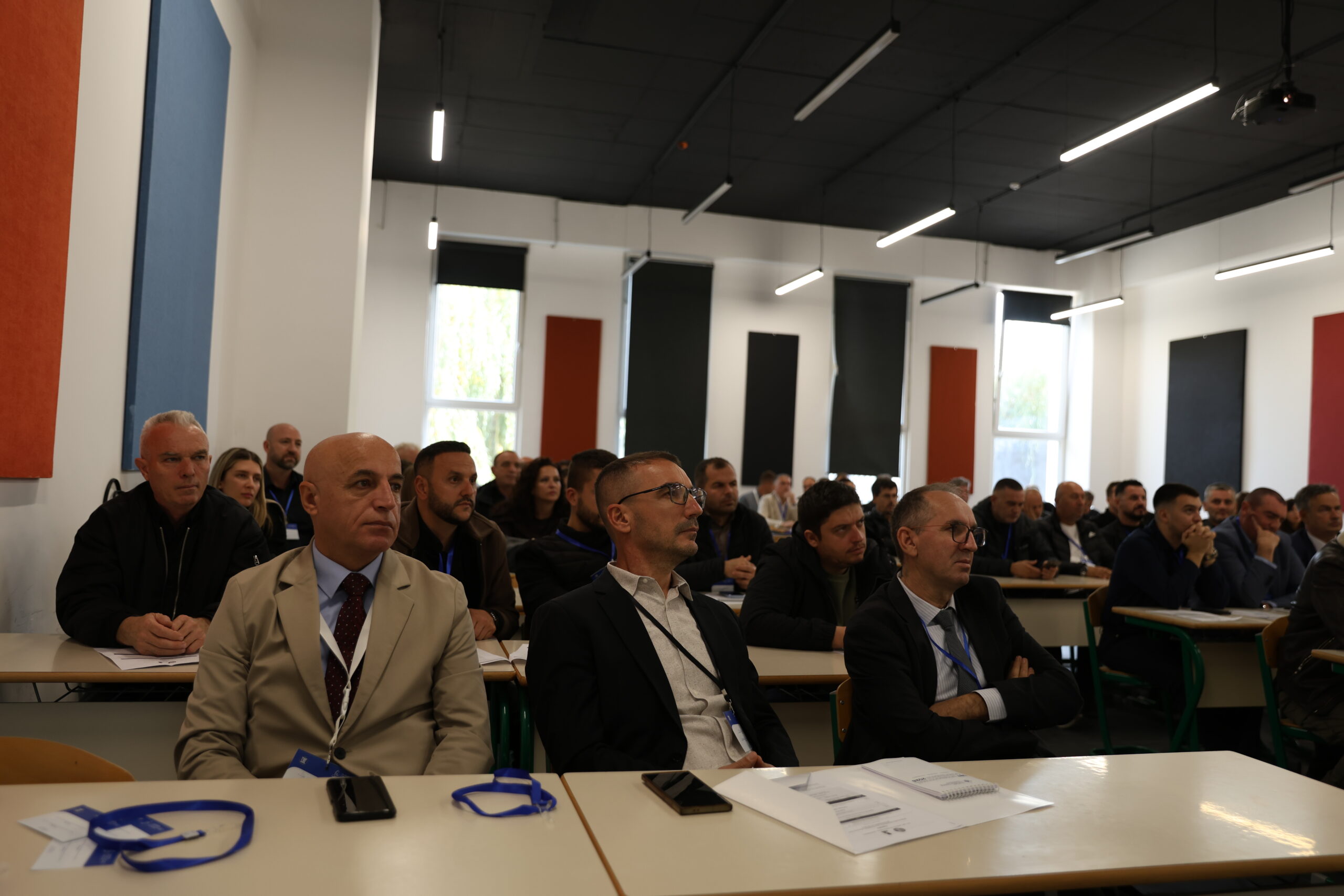
27/10/2026The International Conference on Civil Engineering (IC-CEIE 2026) at UBT provided an important scientific platform for presenting research, exchanging professional experience, and discussing the latest developments in civil engineering. The conference brought together researchers, professors, engineers, and professionals from diverse fields to address topics related to structural design and analysis, seismic safety, modern construction materials, project management, road infrastructure, water resources, and environmental protection.
Through scientific presentations and professional discussions, IC-CEIE 2026 aimed to encourage collaboration between academic institutions and the construction sector, while contributing to innovative, sustainable, and efficient solutions to current industry challenges. The conference programme was organized into four thematic sessions covering structural engineering; construction management and safety; geotechnical and environmental engineering; and transport and road infrastructure.
Session One
Chair: Visar Krelani
Co-Chair: Marco Pingaro
- On the Homogenization of Random Composite Materials: A Fast Statistical Homogenization Procedure (FSHP) – Marco Pingaro and Patrizia Trovalusci.
- Stochastic Geometry-Based Assessment of the Influence of Randomized Internal Masonry Texture on Pier Stability – Bledian Nela, Marco Pingaro, and Patrizia Trovalusci.
- The Structural Role of Horizontal, Vertical, and Diagonal Timber Ties (Hatllat) in Traditional Adobe Buildings – Alush Shala, Teuta Imeri, and Leoart Shala.
- Seismic Retrofitting of Existing RC Structures: A Comparative Study of FRP Wrapping and RC Jacketing under Eurocode 8 – Fatih Erguler and Bledian Nela.
- Study of the Seismic Behavior of Masonry Infill Walls: A Case Study – Blendi Ethemi and Bledian Nela.
- Hebraic Cultural Center in Prizren: Structural Conservation and Interventions – Getoar Zogu.
- Selection of Rehabilitation and Maintenance Systems for Reinforced Concrete Bridges – Naser Morina and Blertë Retkoceri.
- From Taylor Series to Pile Foundations Axial Displacements – Feti Selmani.
- Carbon Fibers – The Material of the Future – Mehmet Beka and Naser Morina.
- Simplified Moment–Curvature Analysis of a GFRP Reinforced Concrete Beam – Xhemshir Mulliqi.
- Linearized Regression Model for Estimating the Flexural Capacity and Deformability of GFRP Reinforced Concrete Beams – Xhemshir Mulliqi.
- Influence of Load Level and Loading Frequency on the Fatigue Degradation of an Eccentrically Compressed Reinforced Concrete Bridge Column – Florim Istrefi.
- Parametric Fatigue Assessment of a Welded K Joint in an Idealized Tower Crane Jib – Florim Istrefi.
- Structural Interface Systems for Energy Efficiency, Comfort and Construction Productivity: International Practice and Relevance for Kosovo – Mazllum Kamberi.
- Experimental Analysis of the Effect of Fiber Orientation on the Mechanical Behavior of Prismatic and Slab Elements – Diellza Vishi, Pedro Serna Ros, and Visar Krelani.
- Durability Performance of Cracked Concrete with Epoxy-Protected Steel – Leart Shabani, Pedro Serna Ros, and Visar Krelani.
Session Two
Chair: Muhamet Ahmeti
- The Main Factors Affecting the Limestone Calcination Process in a Vertical Twin-Shaft Kiln: A Case Study of the Tekno–Konstrukt Lime Factory, Kosovo – Ragip Behrami, Naim Hajdini, Hysen Ahmeti, Ilir Hetemi, and Ermal Osaj.
- Statistical Characterization of Earthquake Occurrence in the Dukagjin Seismic Zone, Northwestern–Western–Southwestern Kosovo: Magnitude of Completeness and Frequency–Magnitude Parameters – Shemsi Mustafa, Visar Krelani, Bekim Selimi, and Hazir Çadraku.
- Occupational Safety and Health Protection in Kosovo: A Comparative Analysis with Regional Countries – Muhamet Ahmeti and Arberesha Kastrati.
- The Impact of Occupational Safety Protection on Dynamic Construction Project Execution: Kosovo and Regional Perspectives – Arberesha Kastrati and Muhamet Ahmeti.
- From EN 206:2013+A2:2021 to EN 206-1:2026 and EN 206-2:2026: What Changes in Concrete Production, Quality Control and Conformity Assessment? – Butrint Kryeziu and Driton Kryeziu.
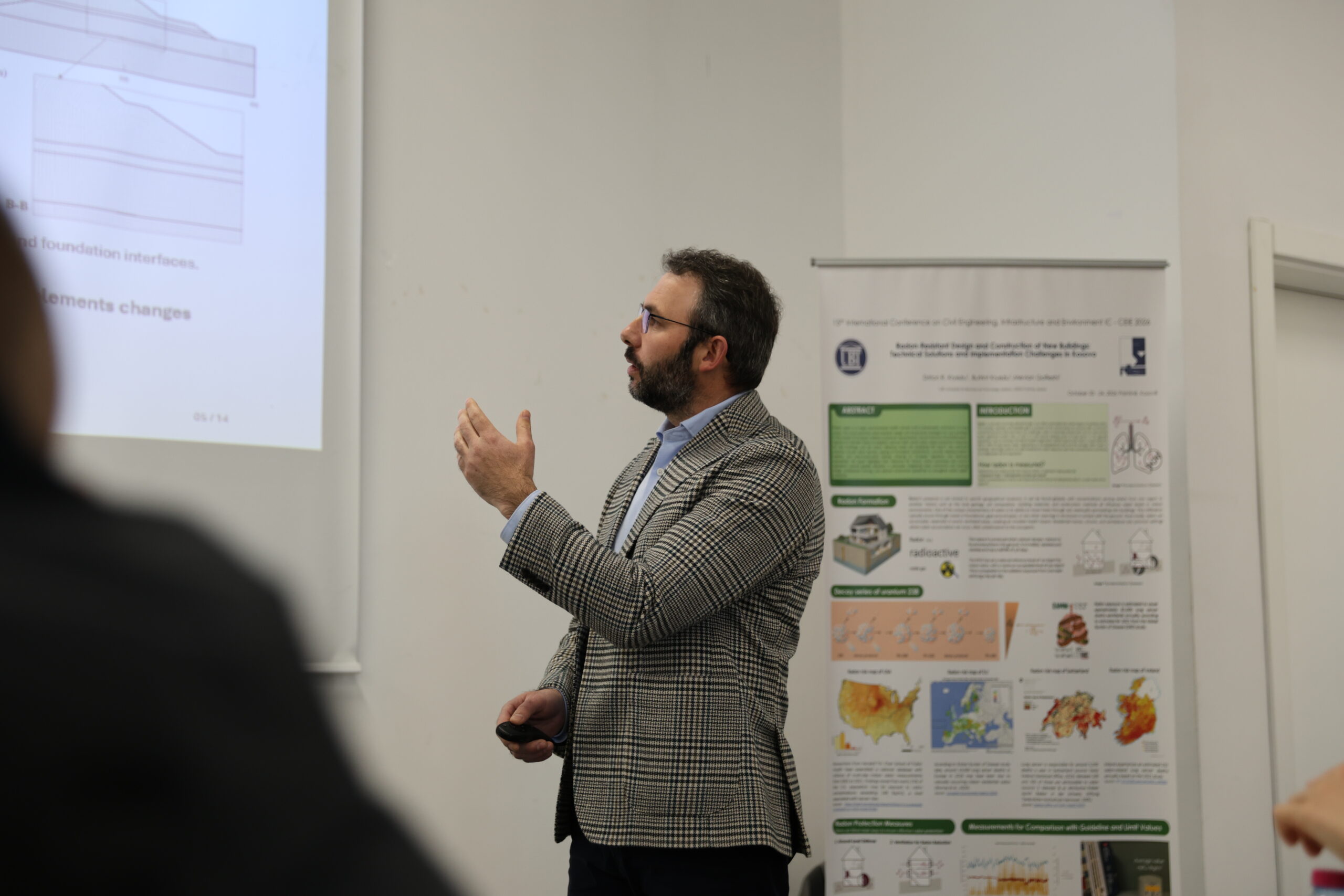
- Radon-Resistant Design and Construction of New Buildings: Technical Solutions and Implementation Challenges in Kosovo – Driton Kryeziu, Butrint Kryeziu, and Mevlan Qafleshi.
- Emergency Contract Administration and Technical Valuation under FIDIC Conditions: Reconstruction of the Damaged Aqueduct at Segment PAK1.2 (Ibër-Lepenc Canal) – Zyber Gaga.
- Management of the Construction of Affordable and Social Housing Buildings in Kosovo – Rame Hamzaj.
- Maintenance Management and Renovation of the School Building “Fehmi Lladrovci” in Drenas – Shqipdon Zariqi.
- Risk Management and Analysis in Construction Investments in Kosovo – Denis Cana and Visar Hoxha.
- Construction Project Management: Strategies for Effective Planning and Implementation – Zenel Gashi.
Session Three
Chair: Skender Bublaku
Co-Chair: Hazir Çadraku
- Racing the Drawdown: Coupled Unsaturated Flow–Stability Response of Embankment Dams to Rapid Reservoir Level Changes – Amir Ghaderi, Saeed Hatamzadeh, and Hossein Mohammadnezhad.
- Measurement of Corrosivity Index of Groundwater in the Magurë Area Using Langelier Saturation, Ryznar Stability, Puckorius Scaling, Aggressiveness and Larson–Skold Indices – Hazir Çadraku and Arjan Beqiraj.
- Biological Wastewater Treatment Options for Kosovo – Skender Bublaku, Blertë Retkoceri, and Nafije Kadriu.
- Management of Asbestos-Containing Materials after Demolition: A Case Study of Ulpiana, Prishtina – Pajtim Ukaj and Anjeza Alaj.
- From a Linear System towards a Circular Economy through Waste Valorization – Fatbardhë Kurti, Anjeza Alaj, Florije Tahiri, and Besijanë Kurti.
- Managerial and Operational Aspects of Wastewater Treatment Plant Construction and Operation: The Case of Peja, Kosovo – Kreshnik Gjata and Anjeza Alaj.
- Harnessing Hydropower Potential: HPP 104 in Dobrosht, Tetovo – Kushtrim Asani and Ilir Abdullahu.
- Options for the Utilization of Water Resources from the Llap River – Arbër Balaj.
Session Four
Chair: Nol Dedaj
Co-Chair: Bekim Selimi
- Traffic Risk Assessment from the Driver’s Perspective Using AI: A Case Study of the City of Prishtina – Visar Baxhuku.
- Design and Analysis of Integrated Water Infrastructure for the Sunlight Home Residential Development in Zllatar, Prishtina – Baton Nura and Ilir Abdullahu.
- Safety Audit of Road Infrastructure Elements During the Reconstruction of Skënderbeu Street in Podujevë – Dorina Bajramaj Asani and Nol Dedaj.
- Analysis and Conceptual Design of a New Interchange on the R6 “Arbën Xhaferi” Motorway, North of Ferizaj – Aurela Gjoshi and Bekim Selimi.
- Analysis of Road Pavement Structure and Road Safety Audit of the R129 Regional Road, Mitrovicë–Podujevë – Fisnik Ibrahimi.
- Soil Liquefaction Risk Assessment Using SPT Tests and Liquefaction Potential Index (PLI) – author names were not specified in the provided material.
Through its four thematic sessions, the conference highlighted research addressing structural resilience, construction safety, sustainable materials, environmental protection, water resource management, and transport infrastructure, reinforcing the importance of scientific collaboration in advancing civil engineering and sustainable development.