Artificial Intelligence and Economic Development in Focus at UBT’s International Conference
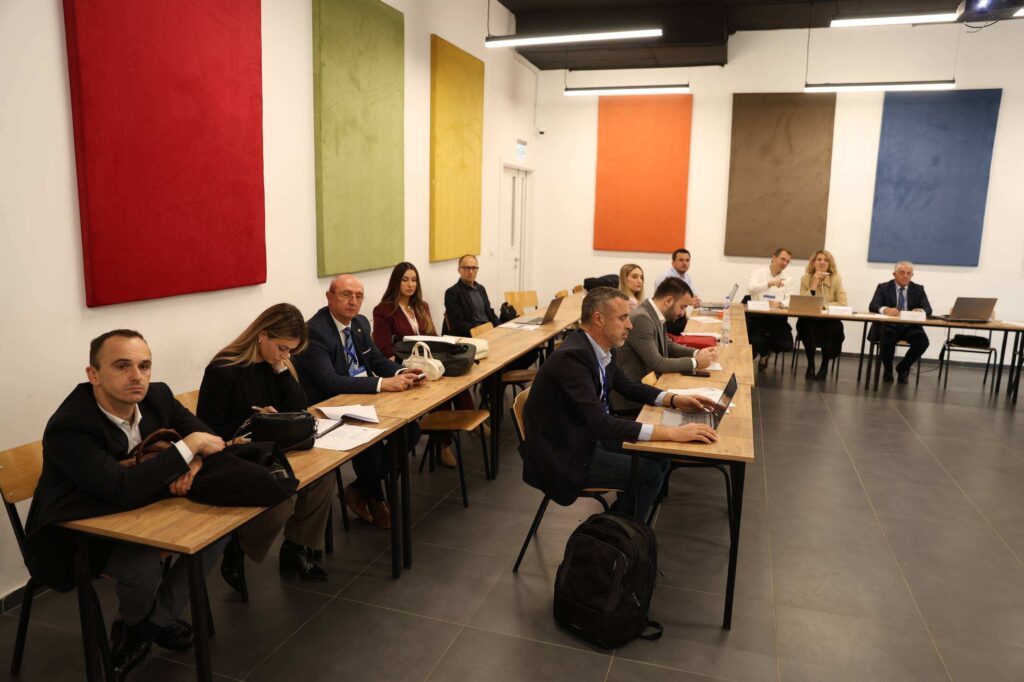
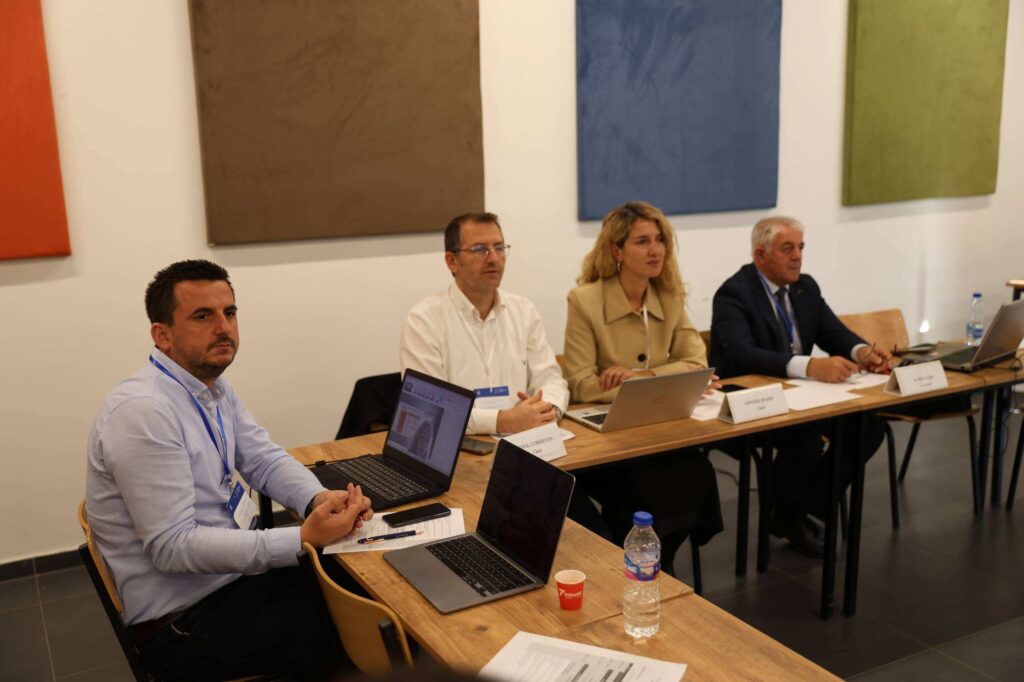
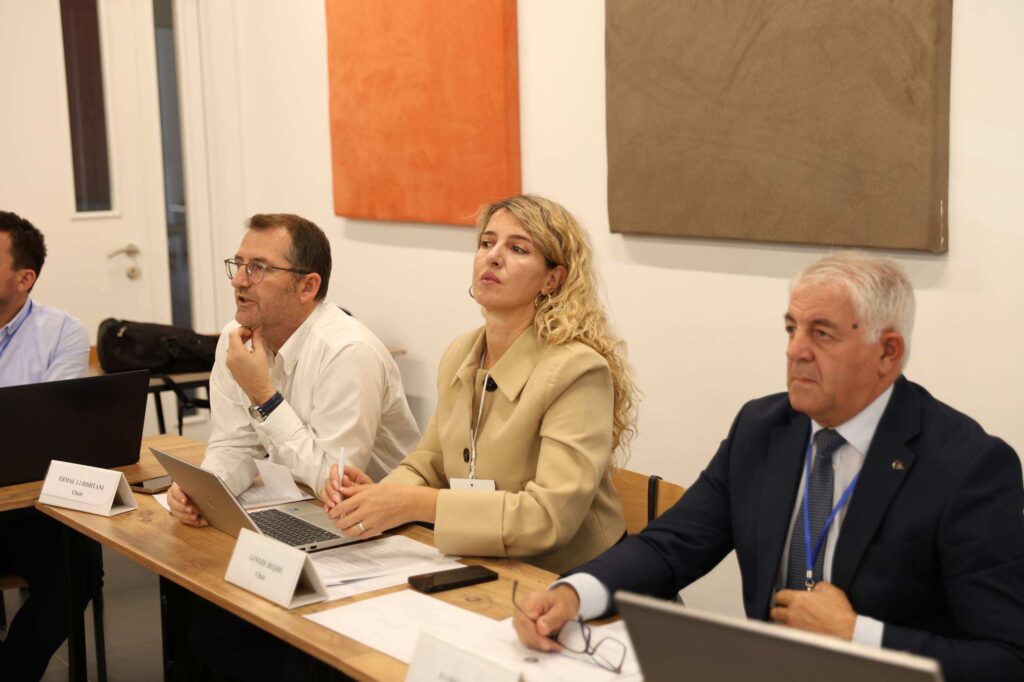
26/10/2026As part of UBT’s International Conference, IC–MBE 2026 brought together researchers and professionals in management, business, and economics to present scientific papers addressing artificial intelligence, digital transformation, finance, entrepreneurship, sustainability, and economic development.
Through a series of sessions, participants explored contemporary challenges facing organisations and markets, presenting empirical analyses, new management models, and policy recommendations for development in Kosovo, the region, and beyond.
Session I: Financial Regulation, Inclusion, and Sustainable Development
Chaired by Ylber Limani, with Sema Kazazi as co-chair, the first session addressed financial institution regulation, women’s participation in the economy, green investment, artificial intelligence, and public governance.
The papers presented included:
- Shpresim Vranovci – “The Mandatory Divestment of NGO-Owned Microfinance Institutions: A Stakeholder-Based Regulatory Perception Framework.”
- Arta Mulliqi – “Women’s Participation in Management and Ownership and Female Employment in Kosovo Firms.”
- Ermal Lubishtani and Nermin Oruc – “Facilitating Green Investment in Kosovo: Evidence from the Western Balkans Six.”
- Holta Kora – “Artificial Intelligence Adoption and Economic Transformation in Emerging Europe: Evidence from Albania.”
- Rozafa Kelmendi and Gonxhe Beqiri – “Making Invisible Harm Administratively Visible: Governance Innovation in the Recognition of CRSV Survivors in Kosovo.”
- Eloundou Okala Eugène Bertrand, Mvogo Gregory Paulin, and Ngoa Tabi Henri – “The Effects of Financial Inclusion on Health Outcomes: Does Mobile Money Matter?”
Session II: Artificial Intelligence, Financial Performance, and Economic Trends
The second session, chaired by Ermal Lubishtani, with Kaltrina Sylaj as co-chair, focused on AI adoption in businesses, financial performance, cryptocurrency markets, inflation, and the importance of remittances.
The presentations included:
- Edona Draga and Visar Rrustemi – “Artificial Intelligence Adoption in Service-Sector Businesses: Evidence from the Western Balkans.”
- Visar Hoxha – “Components Predicting the Adoption and Trust in UVC Technology in Facilities: A Quantitative Analysis from Prishtina, Kosovo.”
- Florin Aliu and Alban Asllani – “Detecting and Analyzing Bitcoin Price Bubbles: Evidence from 2017 to Early 2025.”
- Luljeta Sadiku, Nimete Berisha, and Murat Sadiku – “Does Inflation Harm Economic Growth? Panel Regression Analysis for Western Balkan Economies.”
- Agim Berisha – “The Importance of Remittances in Family Well-Being and the Economy – The Case of Kosovo.”
- Monika Syziu and Ela Golemi – “Investigating the Long-Term Equilibrium: Macro-Financial Factors Influencing Non-Performing Loans in Albania.”
- Albrim Badallaj – “The Moderating Role of Companies’ International Orientation in the Relationship Between ESG Performance and Financial Performance: Evidence from European Companies.”
Session III: Financial Governance, AI, and Organisational Performance
Chaired by Gonxhe Beqiri, with Hamëz Rama as co-chair, the third session explored financial governance, the impact of artificial intelligence on education and the workplace, business performance, and financial auditing.
The papers presented were:
- Blerina Nurce – “Beyond PIFC: Towards an Intelligent Financial Governance Model for Resilient Public Institutions.”
- Gazmend Uka – “Prompting Before Thinking? How Generative AI May Bypass Creative Stages in Architectural Design Education.”
- Blerim Dragusha – “Understanding Employees’ Readiness for Artificial Intelligence: Evidence from the Kosovo Workplace.”
- Kujtim Zylfijaj – “The Impact of Informal Competition and Labour Shortages on Firm Performance.”
- Sema Ebibi Arifi and Viktorija Mangaroska – “Integrating Environmental and Economic Performance into Sustainable Material Selection for Educational Buildings in North Macedonia.”
- Gresa Mjaku Krasniqi and Vrion Krasniqi – “Beyond AI Adoption: Generative Artificial Intelligence and Internal Audit Effectiveness Through Professional Judgment.”
- Ylber Limani and Erzë Daku – “Artificial Intelligence, Automation, and Financial Auditing: A Global Comparative Analysis Using Machine Learning.”
Session IV: Business Innovation, Entrepreneurship, and Green Growth
The fourth session, chaired by Arta Mulliqi, with Kujtim Zylfijaj as co-chair, addressed business innovation, entrepreneurship, the resilience of small and medium-sized enterprises (SMEs), corporate strategies, and green development.
The presentations included:
- Walid K. Alrawi – “Business Innovation and Entrepreneurship in the United Arab Emirates: Evidence, Practice, and Policy Implications for the United Arab Emirates.”
- Fisnik Bytyqi – “Employee Voice as a Source of Organizational Diagnosis: Evidence from a Company Retreat.”
- Blerim Morina – “Entrepreneurship and SME Resilience in Kosovo: The Role of Innovation Support Institutions.”
- Erëmirë Musliu Zhubi and Donjeta Osmani Statovci – “Operational and Growth Strategies in Online Service Businesses: An International Case Study.”
- Erëmirë Musliu Zhubi and Donjeta Osmani Statovci – “Women Entrepreneurs in Kosovo and Germany: A Comparative Study of Challenges and Opportunities.”
- Ardit Gjeci, Andromahi Kufo, and Klea Gruda – “Green Growth and Sustainable Development: Comparing the Determinants across EU and Western Balkan Countries.”
- Afërina Skeja – “Digital Transformation and Organizational Resilience: A Management Perspective on SMEs in Kosovo.”
- Vippassana Yonzon – “Mobile Learning as a Catalyst for ICT-Driven Development: Continuance Intention and Actual Use Among Students in Darjeeling and Cooch Behar District of North Bengal, India.”
Session V: Digital Transformation, Marketing, and Financial Protection
Chaired by Shpresim Vranovci, with Ardian Uka as co-chair, the fifth session focused on digital transformation, marketing, tourism, data analytics, and financial protection systems.
The papers presented included:
- Ermira Shehu and Besim Mustafa – “The Impact of GS1 Standards on Product Marketing: A Case Study of the Republic of Kosovo.”
- Amal El Mallouli, Adil Outla, and Hassan Sassi – “From Cash to Clicks: An Exploratory Qualitative Study on Barriers to POS Terminal Adoption in Moroccan Neighbourhood Retail.”
- Arta Kadriu, Kushtrim Dreshaj, and Fatmire Dreshaj – “Tourism Resilience, Innovation, and Sustainability: Toward an Integrated Framework for Post-Crisis Destination Development.”
- Nour-Eddine Salma – “Does Digital Transformation Enhance Corporate Financial Performance? Evidence from Listed Companies on the Casablanca Stock Exchange.”
- Lum Zeqiri and Gonxhe Beqiri – “Social Media and Business Growth: The Case of Local Businesses in Kosovo.”
- Roy Andersen – “The Myth of Inherited Intelligence and the Future of Education.”
- Ylber Limani and Entela Bajrami – “Digital Transformation and the Role of Data Analytics in Auditing Marketing Strategies.”
- Syed Taha Mueen – “Financial Protection in India through Ayushman Bharat PMJAY: Evidence from Large Scale Survey.”
Session VI: Local Economic Development, Tourism, and Innovation
The sixth session, chaired by Fisnik Bytyqi, with Getoar Lubeniqi as co-chair, explored local economic development, tourism and employment, food safety, the circular economy, migration, and the role of innovation in organisational performance.
The presentations included:
- Kushtrim Dreshaj and Fatmire Shala Dreshaj – “The Role of the Tourism and Hospitality Sector in Job Creation.”
- Arbnora Berisha, Altin Berisha, and Kaltrina Berisha – “Sustainable Plant Protection and Food Safety: Integrated Pest Management as a Driver of Resilient and Sustainable Food Supply Chains.”
- Donjeta Osmani Statovci and Erëmirë Musliu Zhubi – “A Circular Economy Model for Furniture Factories: Transforming Wood Waste into New Products.”
- Eugène Bertrand Eloundou Okala, Grégory Paulin Mvogo, and Franck-daniel Ateba – “Financial Inclusion and Migration Decisions: The Role of Mobile Money.”
- Diana Vrajolli and Kujtim Zylfijaj – “Innovation Management, Digital Transformation, and AI as Predictors of Organizational Performance: Evidence from Kosovo.”
- Arena Duraj and Venet Shala – “Leaders’ Psychological Tactics and Negotiation Effectiveness: An Empirical Study in Kosova.”
- Driton Fetahu – “The Role of Small and Medium Scale Enterprise in Local Economic Development (LED – Case of Kosova).”
- Hamëz Rama and Andra Krasniqi – “Customer Relationship Management in Kosovo through the CRM System.”
Session VII: Digital Finance, Fiscal Transparency, and Economic Models
The seventh session, chaired by Ermira Shehu, with Kestrim Avdimetaj as co-chair, addressed accounting and fiscal transparency, employment and social welfare, telecommunications regulation, digital finance, and economic models.
The papers presented included:
- Diamanta Skenderi – “Tax Accounting and Digital Tax Compliance in Kosovo: Transparency, Reporting, and Fiscal Accountability.”
- Veli Lecaj and Vleran Bojaxhi – “Unemployment, Employment, and Social Welfare – Case Study of Kosovo.”
- Ardian Uka – “A Comprehensive LRIC Cost-Modelling Framework for Telecommunications: Network Architecture, Cost Attribution and Regulatory Pricing.”
- Ylber Limani, Diellza Kukaj, and Albiona Osmanaj – “Digital Transformation in Finance: Assessing the Interrelated Effects of Advanced Analytics and AI on Risk and Innovation.”
- Shaqir Elezaj and Ramë Elezaj – “Static Economic Efficiency under a Resource Use Cap.”
- Edona Ajeti-Demiri, Edin Demiri, Era Memeti, and Laura Ajeti-Azemi – “Nash Equilibrium in Economic Competition Models.”
- Rajan Arapi and Jona Dakaj – “The Evolution of Marketing in the Era of Artificial Intelligence.”
- Burhan Reshat Rexhepi – “Kosovo’s Trade Deficit and Import Dependence: An Empirical Analysis of the Foreign Trade Structure, January–October 2025.”
Through its seven sessions, IC–MBE 2026 provided a platform for knowledge exchange and the presentation of research findings in fields of significant importance to economic and social development. The topics highlighted the role of artificial intelligence, innovation, digital transformation, and sustainable policies in improving business performance, strengthening institutions, and advancing the economy in Kosovo and beyond.